
On a spec sheet, a laboratory glassware washer is a list of numbers. What actually determines the cleaning result is the sequence of four stages running inside the program - pre-wash, main wash, rinse, and hot air drying. Understanding what each stage does, and where its control points are, is what makes "not clean enough" diagnosable.
This article walks through one wash cycle in running order, with parameters from Yuping product documentation.
01 - Four stages, one relay
| Stage | What it does | Control points |
|---|---|---|
| Pre-wash | Flush away most soluble soils | Water temperature, duration, no cleaning agent |
| Main wash | Heating + cleaning agent, break down residues | Temperature, concentration, time |
| Rinse | Flush out cleaning agent and dissolved soils | Number of rinses, final rinse purity |
| Drying | Remove moisture, ready-to-use output | Temperature limit, duration |
Inside a laboratory glassware washer, the four stages are a relay: insufficient pre-wash consumes main-wash cleaning agent on flushing soils; a weak main wash overloads the rinse; an incomplete rinse only bakes residues onto the walls during drying. Cleanliness is produced by the combination, not by any single stage.
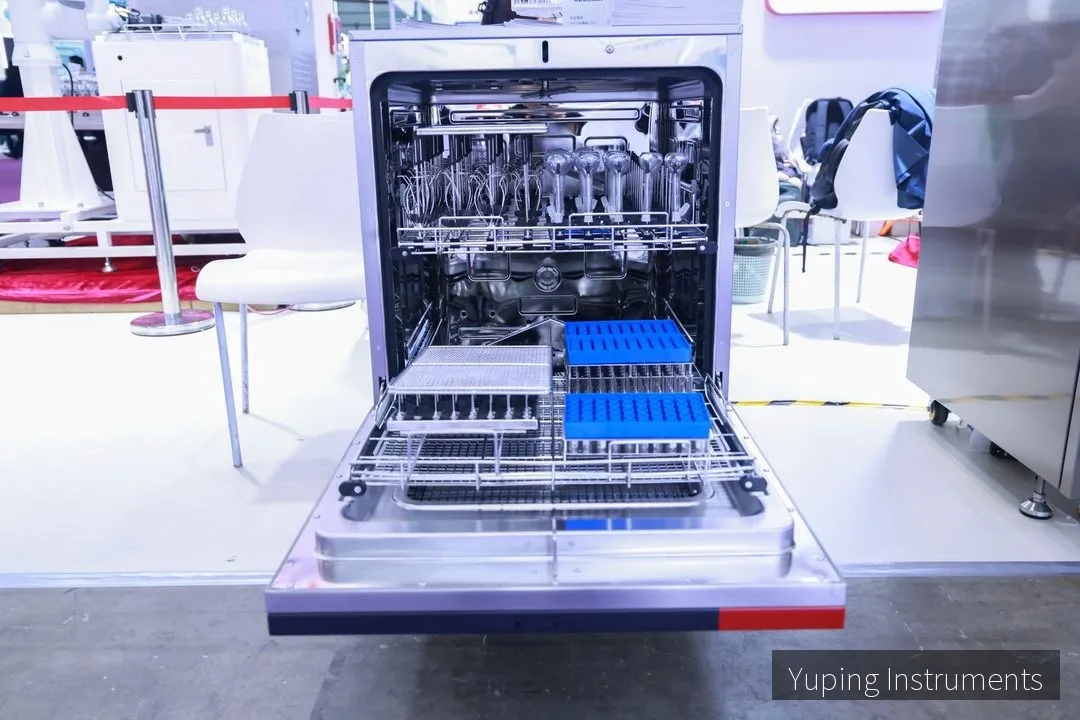
Loaded baskets: injection vials and pipettes racked and ready
02 - Pre-wash: flush the bulk first
Most residues in lab glassware - culture media, buffers, leftovers from the previous run - are water-soluble. The pre-wash flushes them away with warm water, no cleaning agent.
Two reasons not to skip it: it protects the main wash (otherwise the cleaning agent is spent on flushing soils, and its effective concentration drops before the next batch); and it prevents fixation - protein residues denature and adhere when heated, so they should be carried away before temperatures rise.
03 - Main wash: the temperature-concentration-time triangle
The main wash is the only cleaning agent stage. Three variables work together; pushing any one of them alone is inefficient:
Temperature - Yuping washers adjust cleaning temperature continuously from room temperature to 93℃. Higher temperature speeds up the alkaline breakdown of lipids and organic residues, within the tolerance of the glassware.
Cleaning agent concentration - for the Cleaner 60 alkaline cleaning agent: 3-6 mL/L in softened water, 6-12 mL/L in hard water; pH 12-13, with complexing and chelating agents, phosphate-free.
Time - a 5-15 min contact time (Cleaner 60 reference). Longer is not better - time cannot compensate for insufficient concentration.
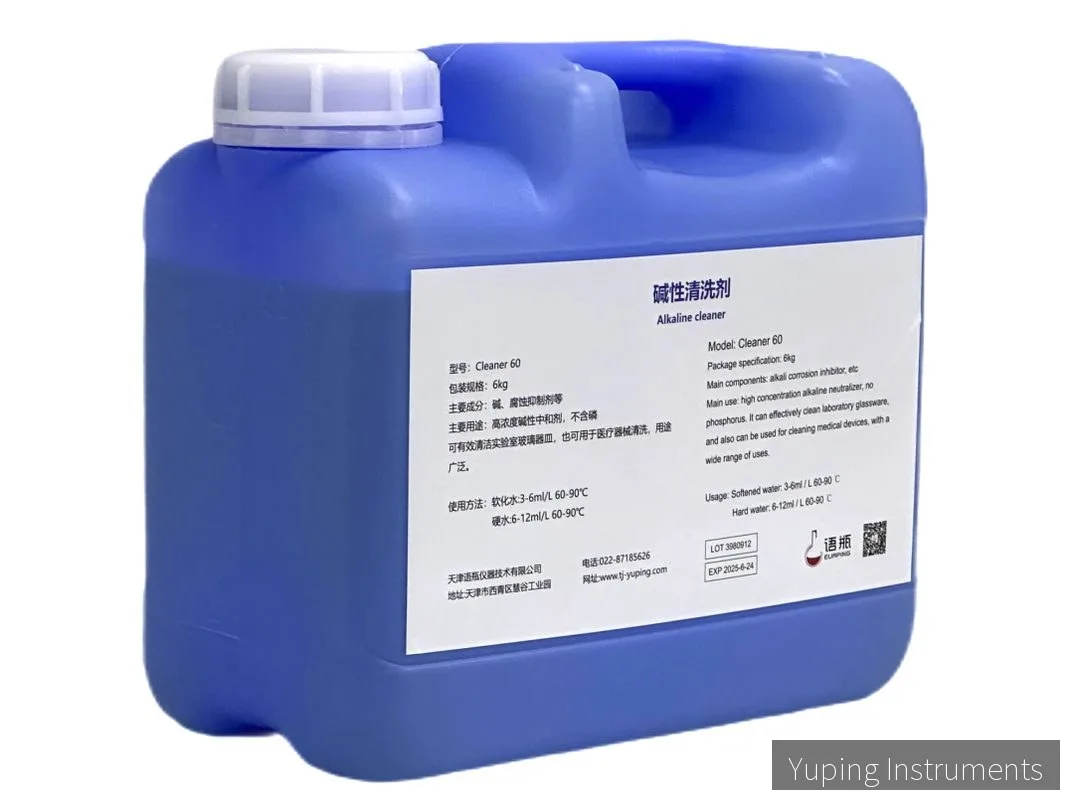
Cleaner 60 alkaline cleaning agent - dosing follows water hardness
04 - Rinse: judged by conductivity difference
The rinse stage replaces chamber water with clean water, flushing out cleaning agent and dissolved residues. "How clean is clean" is not judged by eye - it is judged by the conductivity difference between the rinse water inside the vessels and the feed water. A small difference means rinsing is complete; a large difference means more rinse cycles, or an over-dosed main wash to correct.
Trace-analysis labs set a higher bar: a non-recirculating ultra-pure water final rinse (acid reflux / trace cleaning configuration) brings backgrounds down to ppb or even ppt levels.
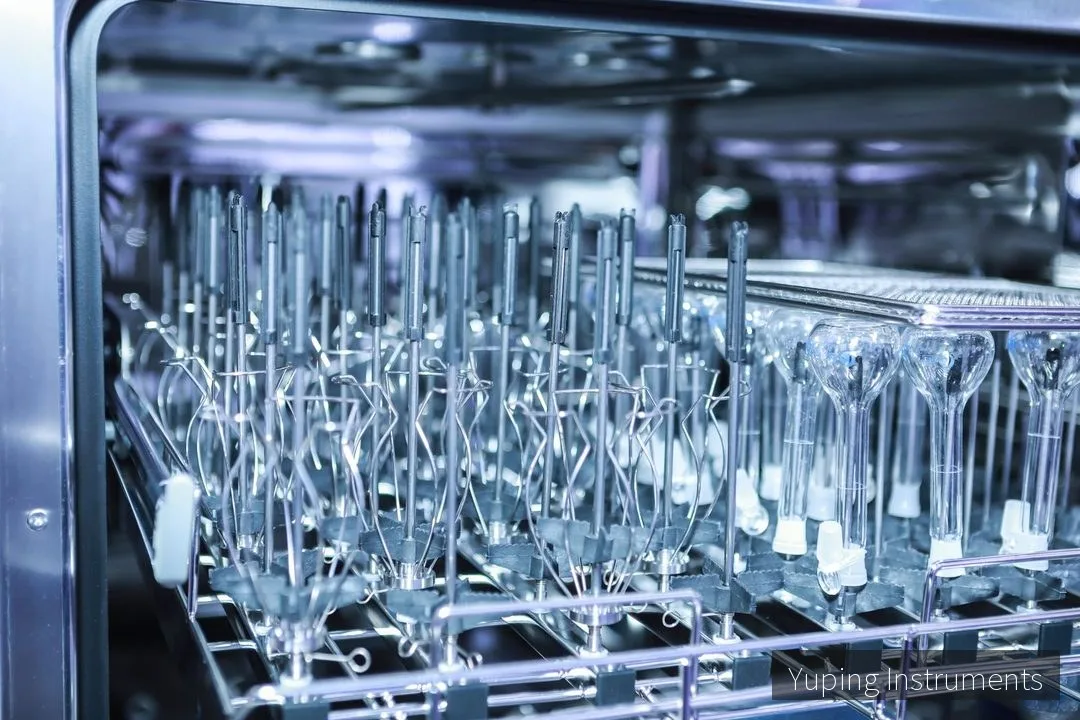
Necks down: pipettes and volumetric flasks inside the wash chamber
05 - Drying: ready to use
Hot air drying removes moisture inside and out, so vessels go straight back to the bench - no upside-down air-drying.
- Drying temperature limit: 120℃ (catalog parameter, GMP series configuration).
- Temperature-sensitive glassware is set lower: domestic volumetric flasks are recommended at 50-60℃ - no impact on calibration below 65℃; imported glass tolerates more.
- Under-drying has a real cost: wet vessels carry the quality of "that bucket of air" into calibration and culture.
06 - The program: four stages, written down
Temperatures, durations and cleaning agent actions all live inside the program of a laboratory glassware washer: the Q Series ships with 30 predefined programs plus 120 user-defined slots; control runs on a Siemens PLC (S7-1200 on the GMP series).
For pharmaceutical settings: three-level Permission Management (four levels on the Q2900), operation data export via SD card / USB or printout, linked to batch traceability.
The point of a program is not convenience - it is reproducibility: same glassware, same program, and this week's wash is the same record as next week's.
"Each stage does its own job - cleanliness comes from the combination."
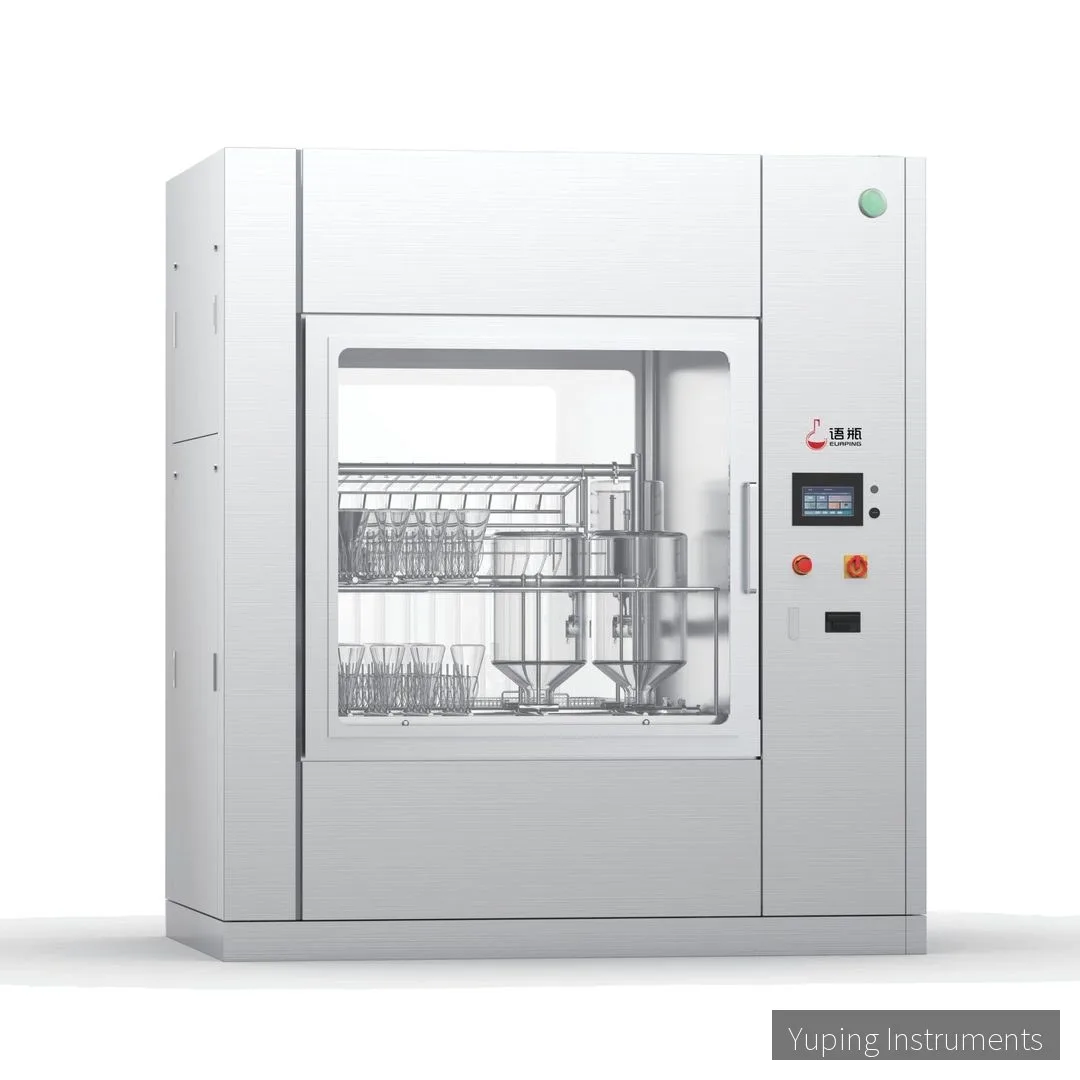
GMP series laboratory glassware washer - validated washing for pharmaceutical workshops
Post time:Nov-26-2026