
Spotless Cleaning for More Accurate Experimental Data
Laboratory ultrasonic cleaners utilize ultrasonic vibration principles for cleaning. Relying on vibration for dirt removal, they tend to leave ultrasonic spots. These spots adhering to the inner walls of volumetric flasks may affect calibration accuracy, creating hidden risks for experimental data.
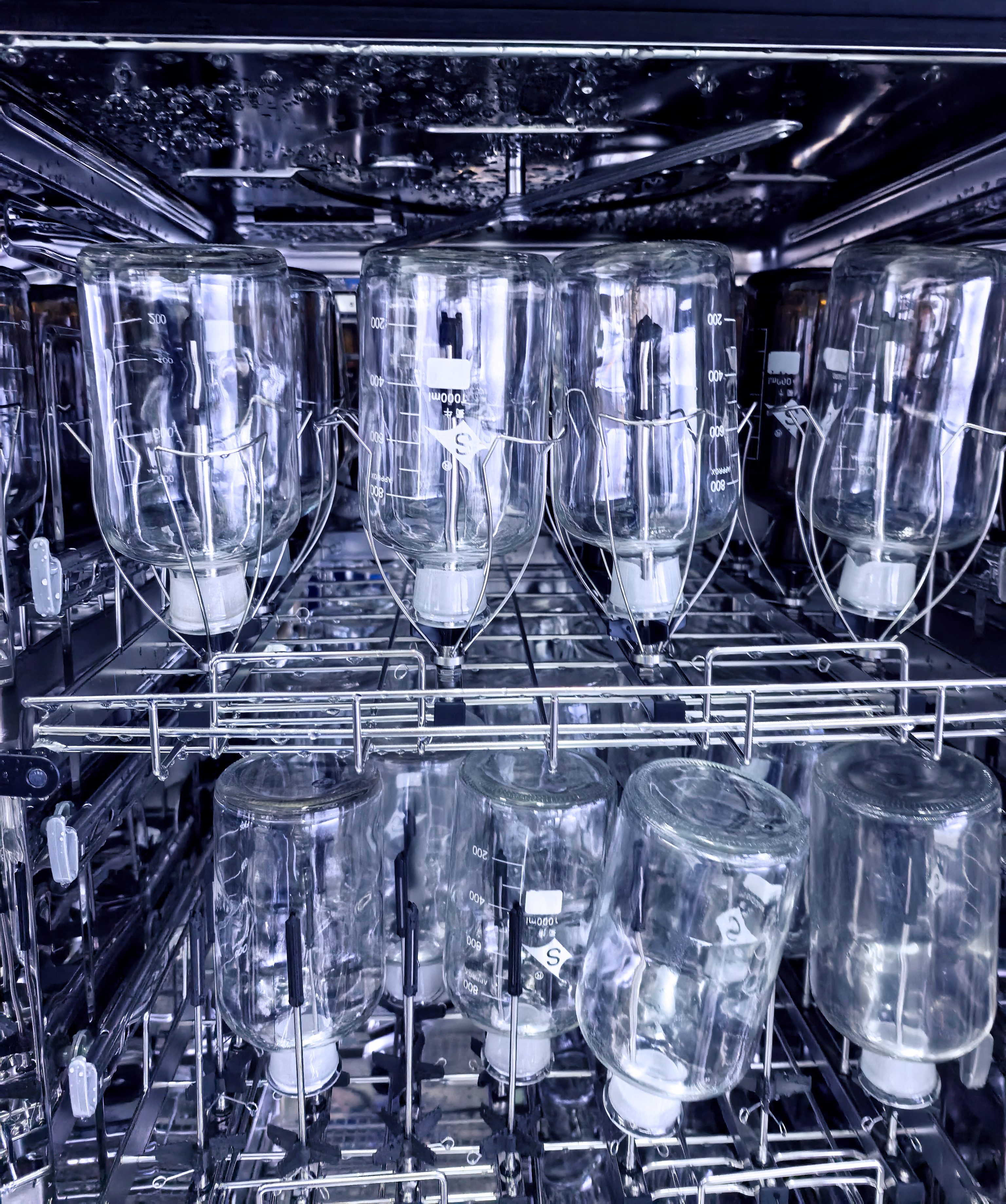
Fully Automatic Process, Doubling Efficiency and Saving Labor
Ultrasonic cleaning only completes "half the job". After cleaning, bottles still require manual removal, rinsing, and drying, involving tedious steps and extremely low efficiency during batch processing. The Eurping Bottle Washer achieves a fully automatic "dirty bottles in, clean bottles out" process, completing cleaning, rinsing, and hot air drying with one click, no manual intervention needed. The advantages become even more apparent during batch cleaning, eliminating the hassle of manual finishing work and allowing laboratory professionals to focus on core tasks.
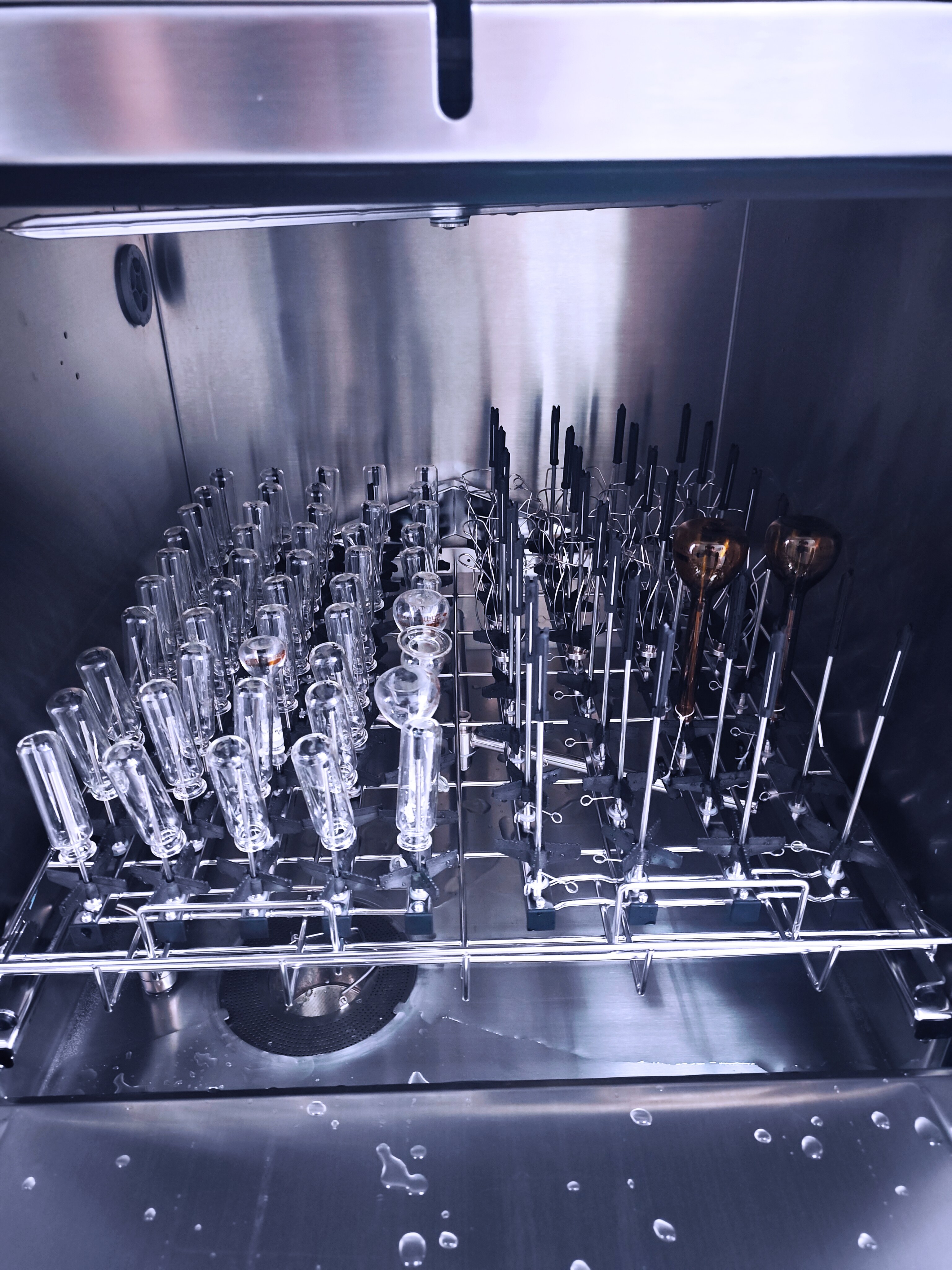
The Eurping Bottle Washer adopts a gentle water washing mode with precision pressure control. Both water pressure and cleaning solution intake can be freely adjusted to meet the cleaning needs of different instruments. It not only provides powerful stain removal but also prevents glassware damage, effectively extending the service life of precision glassware such as volumetric flasks and pipettes, making it more cost-effective for long-term use.
Post time:Jan-07-2026