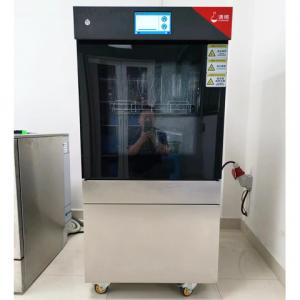

The Science of Clean: Understanding Laboratory Washer Detergent
Why Specialized Formulations Are Critical for Scientific Accuracy
When a laboratory makes the significant decision to purchase an automated glassware washer, many managers make a critical, yet common, mistake: they attempt to cut costs by using standard household dishwashing liquids or cheap industrial soaps. This is a fundamental error that can compromise entire batches of research, ruin expensive analytical instruments, and invalidate laboratory accreditation. The truth is, an automated washer is only as effective as the chemicals it uses. This is why understanding and selecting the right laboratory washer detergent is absolutely vital for any scientific facility.
A laboratory washer detergent is not merely a soap; it is a highly engineered chemical reagent designed to remove specific types of complex contaminants without leaving a trace of its own presence behind.
The Chemistry of Contamination Removal
In a laboratory setting, glassware is subjected to a wide variety of contaminants that household detergents simply cannot handle. These include polymerized organic compounds, heavy biological loads (proteins, lipids, sugars), inorganic salts, and stubborn particulate matter.
To combat this, laboratory washer detergents are formulated using advanced chemistry. They utilize a careful balance of highly active surfactants to break down surface tension and lift organic soils, combined with powerful alkalis (like potassium hydroxide) to saponify fats and hydrolyze proteins. For inorganic scaling or mineral deposits, specialized acidic detergents containing chelating agents (such as EDTA) are used to bind and dissolve metal ions. Unlike consumer products, these formulations are meticulously balanced to provide maximum cleaning power without etching or microscopically scratching delicate borosilicate glass.
The Danger of Residues and False Positives
The most crucial characteristic of a laboratory washer detergent is its “free-rinsing” nature. Household dish soaps contain additives like fragrances, dyes, optical brighteners, and foaming agents. If these compounds are used in a lab washer, they will leave a microscopic film on the interior of beakers, volumetric flasks, and cuvettes.
This residue is catastrophic in analytical chemistry and life sciences. For example, in High-Performance Liquid Chromatography (HPLC), a microscopic oily film left by a cheap detergent can alter column pressure, cause baseline drift, and destroy the accuracy of the analysis. In cell culture, even trace amounts of chemical residue are highly cytotoxic and will kill sensitive cell lines, leading to failed experiments. Laboratory washer detergents are strictly free of these interfering additives, ensuring that once the rinse cycle is complete, the glassware is chemically pristine.
Protecting Your Capital Investments
Beyond protecting the integrity of the experiment, the correct laboratory washer detergent protects the cleaning equipment itself. Laboratory glassware washers represent significant capital investments, often costing tens of thousands of dollars. Using the wrong detergent can lead to excessive foaming, which can overflow and damage the internal pumps, heating elements, and sensors of the machine. Furthermore, detergents that are not properly buffered can cause severe corrosion in the stainless-steel chambers and internal plumbing over time. Certified laboratory detergents are low-foaming and pH-buffered specifically to extend the lifespan of the washer.
Choosing the Right Detergent for the Job
Selecting a laboratory washer detergent requires an assessment of the lab’s specific needs. Most facilities require a two-detergent system:
- Alkaline Detergent: Used for the main wash cycle to tackle the bulk of organic and biological soils.
- Acidic Neutralizer/Detergent: Used as a secondary wash or neutralizing step to dissolve mineral scales, neutralize residual alkalinity, and passivate the stainless steel inside the washer.
Additionally, labs must choose between liquid and solid detergents. While liquids are easy to dispense, solid detergents (tablets or powders) are increasingly popular because they eliminate the risk of over-pouring, reduce packaging waste, and have an infinitely longer shelf-life without the risk of bacterial contamination that can occur in liquid bottles.
Ultimately, a laboratory washer detergent is the unsung hero of the scientific process. It bridges the gap between dirty glassware and pristine experimental conditions. By investing in the correct, scientifically validated detergents, laboratories ensure that their results are accurate, their equipment is protected, and their scientific integrity remains intact.
Related News